The History of Visual Communication states that writing is the visual manifestation of the spoken word. For centuries, people have shared stories by writing them down and using descriptive language to help readers create images in their minds. Writing became the root of other forms of visual storytelling, including drawings, photography, and film. While written words encourage us to use our imagination to visualize a story, literal visuals, especially in film, allow those stories to come to life directly before us.
The following moments demonstrate how filmmakers use a single image to communicate emotions, conflicts, and character development that words alone may not be able to capture.
Press the images for the link to their source.
What did they just say?
Losowsky emphasizes that visual storytelling can make information easier to process because images allow us to recognize patterns, relationships, and meaning almost immediately.
Films like Get Out take advantage of this by allowing audiences to understand a character’s emotions and circumstances through visual details and dialogue over time, rather than explicitly explaining everything that is happening.
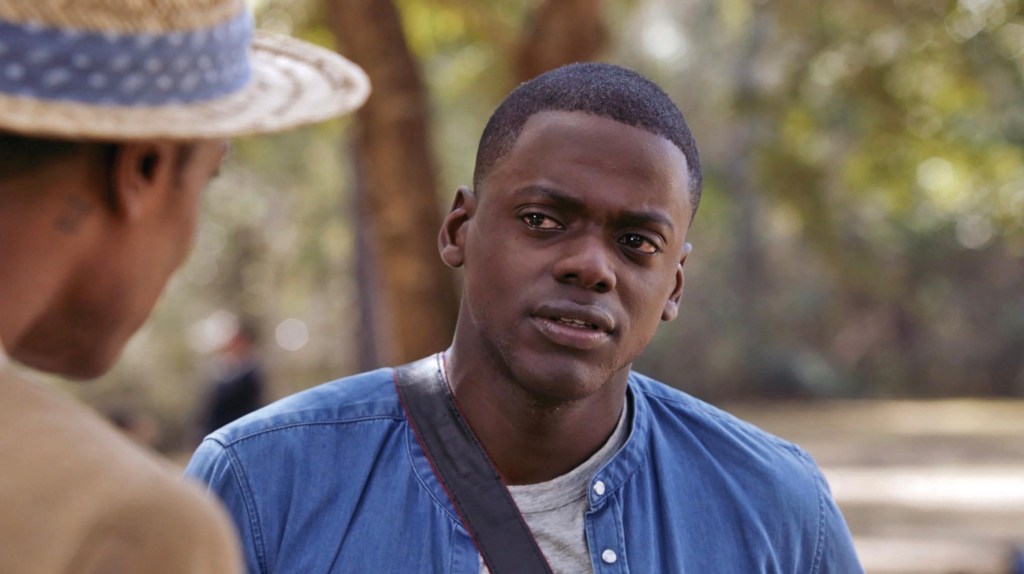
Get Out by Jordan Peele is a psychological thriller centered around Chris, a Black man visiting his white girlfriend Rose’s family for the first time.
Throughout the visit, he begins to notice the family’s disturbing behavior and the off-putting nature of the only two Black people present at the Armitage household, who coincidentally work for the family.
After asking the only other Black guest at the family function what his experience has been like as a Black man in America, Chris becomes perplexed by his positive yet artificial response, causing him to question his safety in their home.
The look Chris gives him is pictured in this scene and it captures a key turning point in the film, where the visit no longer becomes centered around tolerating Rose’s microaggressive parents for a few days, but surviving a family of murderous white supremacists.
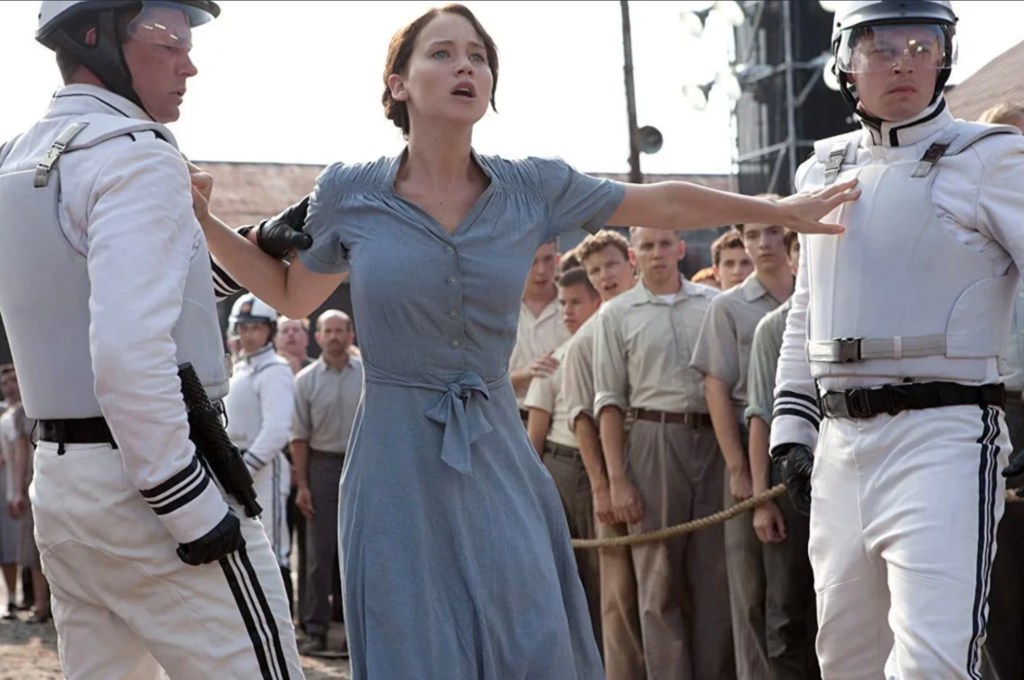
The iconic moment in the Hunger Games (2012) by Gary Ross where Katniss volunteers herself as tribute so her younger sister Prim doesn’t have to fight in the games is yet another defining scene in cinematic history and the entire franchise.
We can see the crowds of people behind her, packed like sardines in the audience, all of them almost wearing the same outfit; colorless and worn in.
Meanwhile, the guards are geared in bright suits covered by futuristic armor.
Katniss’ body language demonstrates her distress in attempting to be the one the district takes instead.
Unexpectedly volunteering leaves everyone perplexed and confused, because who would ever want to sacrifice their life to play in the Hunger Games?
But after this moment, Katniss takes charge, owning her position as a representative of District 12 and being one of the first to fiercely call out the broken system.
Like Chris, Katniss in this scene uses her expression and body language to communicate the weight of the moment,
Unlike a random photograph, a still from a film exists within an established narrative, meaning every element captured in a single frame can represent something much larger than what is immediately visible.
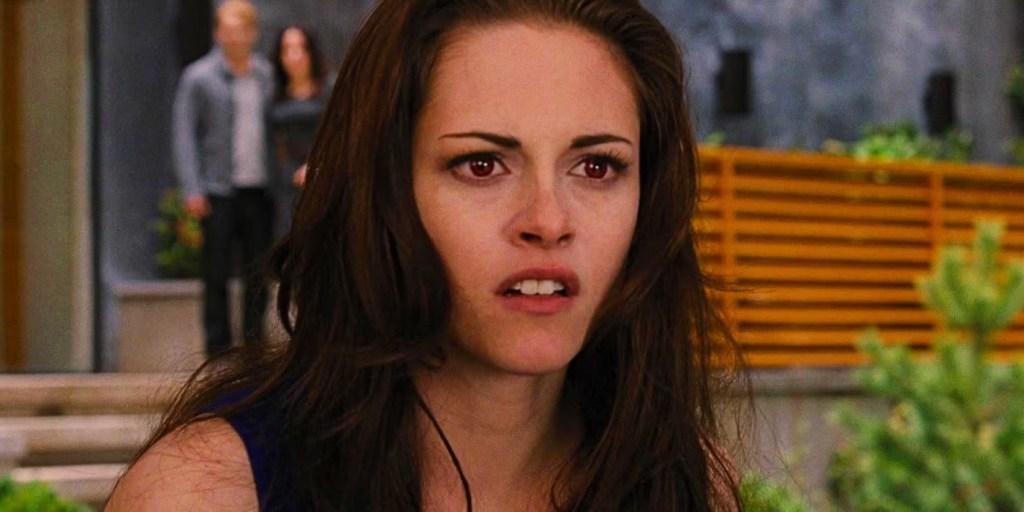
Bella Swan in The Twilight Saga: Breaking Dawn – Part 2 by Bill Condon is pictured in this scene with red eyes and a disturbed look on her face.
Here, she delivers her infamous line: “You named my daughter after the Loch Ness monster?” where she startles Jacob after he refers to her daughter Renesmee as ‘Nessy.’
After Jacob explains that he had imprinted on her daughter and his feelings for her were never about their relationship to each other, but instead Renesmee, Bella looks disgusted by him and angered that he would ever feel so inclined to give her daughter such a nickname.
The close up on her face helps viewers notice her red eyes, an indicator of her conversion to vampire, a once sensitive and gentle character had converted into a full-blown Cullen.
With some of the Cullens in the background admiring her newfound aggression, this scene establishes that Bella’s ordinary life, is no more.
While Bella’s transformation is reflected through the changes in her appearance and behavior, filmmakers can also use the spaces surrounding their characters to create meaning. In Backrooms, the environment becomes just as important as the character, using emptiness and isolation to create an unsettling sense of uncertainty.
They’re not alone
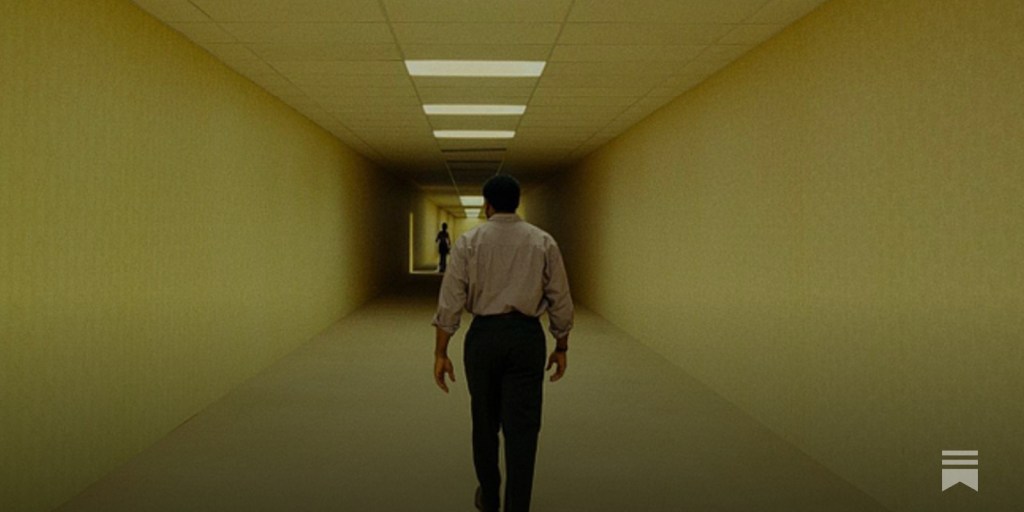
This scene in Backrooms by Kane Parsons is where Clark discovers a cardboard cutout of a caveman repeating phrases in different languages in the middle of the Backrooms.
As he slowly approaches the cutout, the scene cuts to this shot, where we can see just how alone he is in such an eerie space.
The Backrooms is a series of never-ending spaces where everything feels perfectly misplaced and deeply off-putting. Clark’s loneliness in the outside world puts him in a position where he wants to find meaning within the unknown.
This is just the beginning of a horrific journey, not only for him but also for the people he involves in his mission to explore the endless tunnels of emptiness.
Bo Bergström explains that a “deeply involving” opening can immediately draw audiences into a story, as seen in Akira Kurosawa’s Seven Samurai.
While The Backrooms gradually builds tension by introducing Clark to an unfamiliar environment, Apocalypto takes the opposite approach. The film immediately throws its characters into chaos, creating a sense of urgency that pulls the audience into the conflict from the beginning.
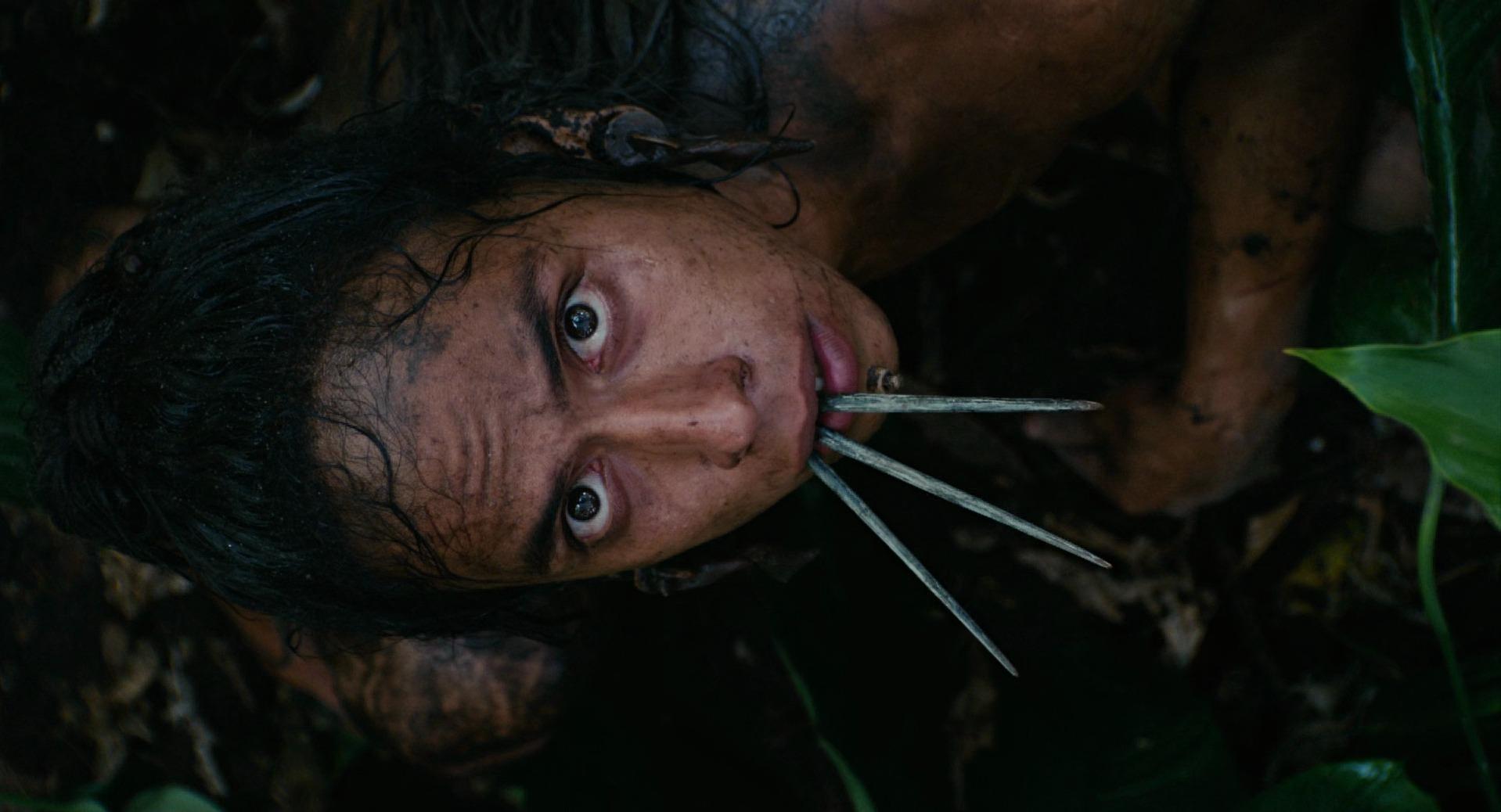
In Apocalypto by Mel Gibson, Jaguar Paw and the rest of his Maya village live together in harmony until they are raided by rivals looking to enslave them and turn them into human sacrifices.
After terrorizing the entire village and capturing many of the men, Jaguar Paw manages to escape in an epic battle for his life, with arrows flying as he makes his way across the field and into the forest.
After outrunning the men, Jaguar Paw comes up with a plan to take them down so he can return to his pregnant wife and son, whom he left behind in a well during the invasion.
He creates the three spikes in his mouth and coats them with poisonous venom from a frog. This scene shows him preparing to make his first attack on the men pursuing him.
The shot captures the exhaustion and determination on Jaguar Paw’s face, allowing the audience to understand the danger he has just endured without showing us everything that led him there.
Breaking Points
By the end of a film, visual storytelling can help tie up loose ends by showing how the characters and conflicts have ultimately changed, whether that be for better or worse.
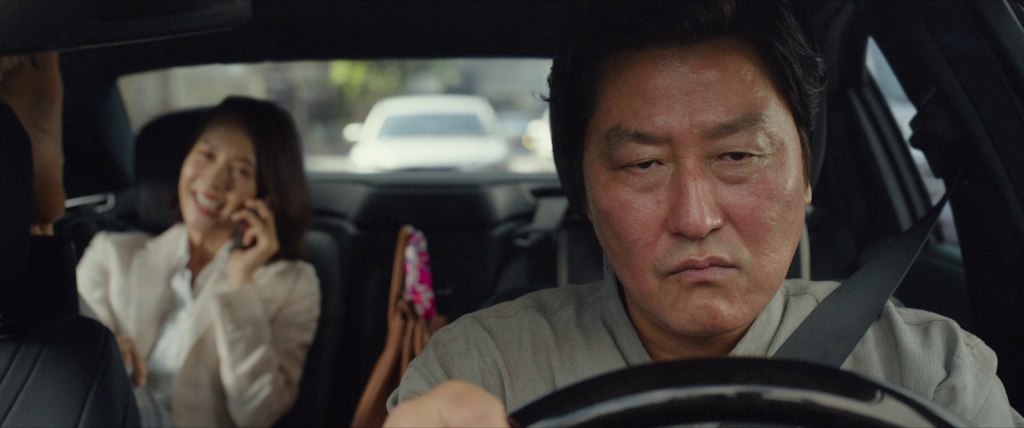
At this point in the film Parasite by Bong Joon Ho, Ki-taek and the rest of his family have infiltrated the Park family’s wealthy lifestyle by finding different ways to work for them simultaneously and living in their house while they’re away.
After months of built-up resentment from working for a family that deems them lesser because of their social status, Ki-taek is on the brink of a breakdown. This shot is one of the many indicators that he is reaching his final straw.
Mrs. Park is on the phone in the back with her husband, and they’re openly talking about Ki-taek’s smell without realizing that he can hear them.
It’s ironic that she is talking about his smell while having her feet up on the headrest of the passenger seat, but this contrast between the two characters and their positions truly highlights the film’s message about class division.
To me, some of the most intense moments in a film happen toward the ending. Many of the films I enjoy the most take time building up the story and by the time we reach the climax, we understand the characters, their motivations, and the conflicts they have faced, making these major moments feel much more impactful.
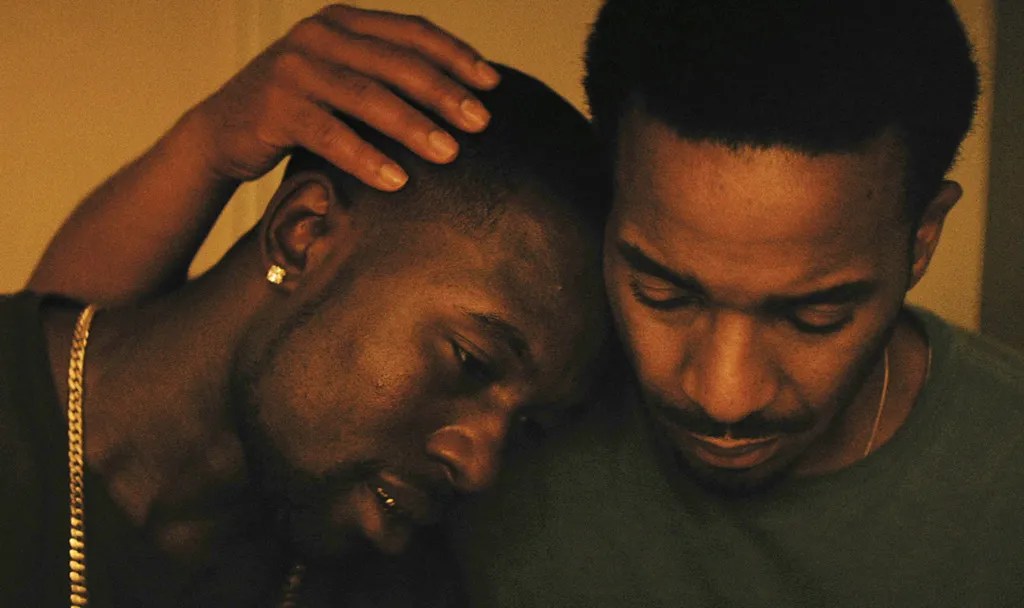
Moonlight by Barry Jenkins follows Chiron through different stages of his life, childhood, adolescence, and adulthood.
As a teenager, Chiron finds that he doesn’t really connect to anyone as much as he does with Kevin.
The two share a kiss at the beach and soon after, Kevin turns on Chiron like the rest of the kids at school. After they distance themselves from each other and step into their adult life, we get to see the reserved life Chiron lives.
But, the two cross paths again, and at the end of their emotional run-in Kevin is comforting Chiron in his house.
This scene comes after Chiron tells Kevin that no one has touched him since their kiss, opening the door for vulnerability between them.
Their expressions are filled with pain and uncertainty, but also a simultaneous sense of relief.
After years of emotional distance and repression, this moment allows both characters to reconnect and embrace a side of themselves they have kept hidden for years.
I agree with Bergström when he states that people are always searching for something to connect to. Whether it is the imbalance between social classes, the racial divide in America, or the fear of loving openly, these films explore different forms of human conflict and the ways people experience them.
Although these stories are different, the emotions they evoke can still feel familiar. Visual storytelling gives audiences the chance to find pieces of themselves in stories that may be different from their own experiences.
References
Bergström, Bo. Essentials of Visual Communication. Laurence King Publishing, 2008.
Klanten, Robert, Sven Ehmann, and Floyd Schulze, editors. Visual Storytelling: Inspiring a New Visual Language. Introduction by Andrew Losowsky, Gestalten, 2011. [1, 2]

