Research question: How do brands visually construct value, and how does that influence the way we see ourselves and other people?

Have you ever looked at a product and immediately assumed it was expensive, even before checking the price? Maybe it was a perfume displayed against a minimalist background, a skincare product packaged in a sleek glass bottle, or a handbag photographed in a way that made it appear almost untouchable. These impressions do not happen by accident. Brands carefully construct their visual identities to influence how consumers interpret their products, often creating a sense of value that extends beyond the product’s actual purpose or quality. Through design, an ordinary item can become a symbol that defines us.
Visual communication plays a significant role in shaping these perceptions because consumers are constantly interpreting messages through what they see. Whether someone is scrolling through a website or walking through a department store, the appearance of a product can influence their expectations before they have the opportunity to use it. These expectations are not limited to whether something looks attractive. They can also shape assumptions about who a product is intended for, what kind of lifestyle it represents, and whether owning it communicates something about a person’s identity.
In Marketing Aesthetics: The Strategic Management of Brands, Identity, and Image, Bernd Schmitt and Alex Simonson explain how companies develop recognizable identities through aesthetic choices that communicate meaning to consumers. Their work demonstrates that a brand’s appearance is not simply decoration but an important part of how its identity is established and maintained. This becomes especially significant when considering how certain visual styles have become associated with class status and beauty standards.
However, the influence of visual branding raises questions that go beyond consumer behavior. If brands can visually communicate what is valuable, they can also influence which lifestyles are considered desirable and which people are represented within those lifestyles. Examining the relationship between visual design and perceived value reveals that branding does more than encourage purchases. It ultimately helps shape the social expectations through which consumers understand themselves and others.
The Visual Construction of Value
The idea that visual design communicates meaning is not new. According to The History of Visual Communication, written language and typography are fundamental tools through which people make ideas visible and understandable. Although the methods of communication have evolved, the underlying purpose remains similar: visual elements help people interpret information and attach meaning to what they encounter. In contemporary marketing, this process extends beyond written messages because the overall appearance of a brand can communicate ideas that are never directly stated.
For example, a skincare company does not necessarily need to describe itself as luxurious if its packaging already creates that impression. A simple bottle with carefully spaced typography, muted colors, and limited decorative elements may suggest sophistication or exclusivity. Meanwhile, a product featuring large promotional labels and brightly colored packaging may communicate affordability and convenience. Neither approach automatically determines the quality of the product, but each establishes expectations about its value.

Schmitt and Simonson explore this relationship in Marketing Aesthetics, explaining that consumers respond both to the immediate appearance of a design and to the meanings they associate with it. Their discussion of Starbucks illustrates how consistent branding can make a familiar product recognizable while allowing individual designs to develop their own identities. Through variations in packaging and seasonal graphics, the company creates a recognizable visual language that connects individual products to the larger brand.
This example demonstrates how visual consistency can contribute to perceived value. Consumers may recognize a product before reading its name because its appearance has already established a connection to the company. Over time, those associations can influence expectations about quality and the experience of purchasing from that brand.
Color is particularly important in this process. In her WordStream article, 8 Ways to Use Color Psychology in Marketing (With Examples), Céillie Clark-Keane discusses how colors can influence the emotional associations consumers develop with brands. She references research into logo recognition in which participants were more likely to remember a logo’s primary color than the company’s name. This suggests that color can become an important part of brand recognition, sometimes leaving an impression even when other identifying details are forgotten.
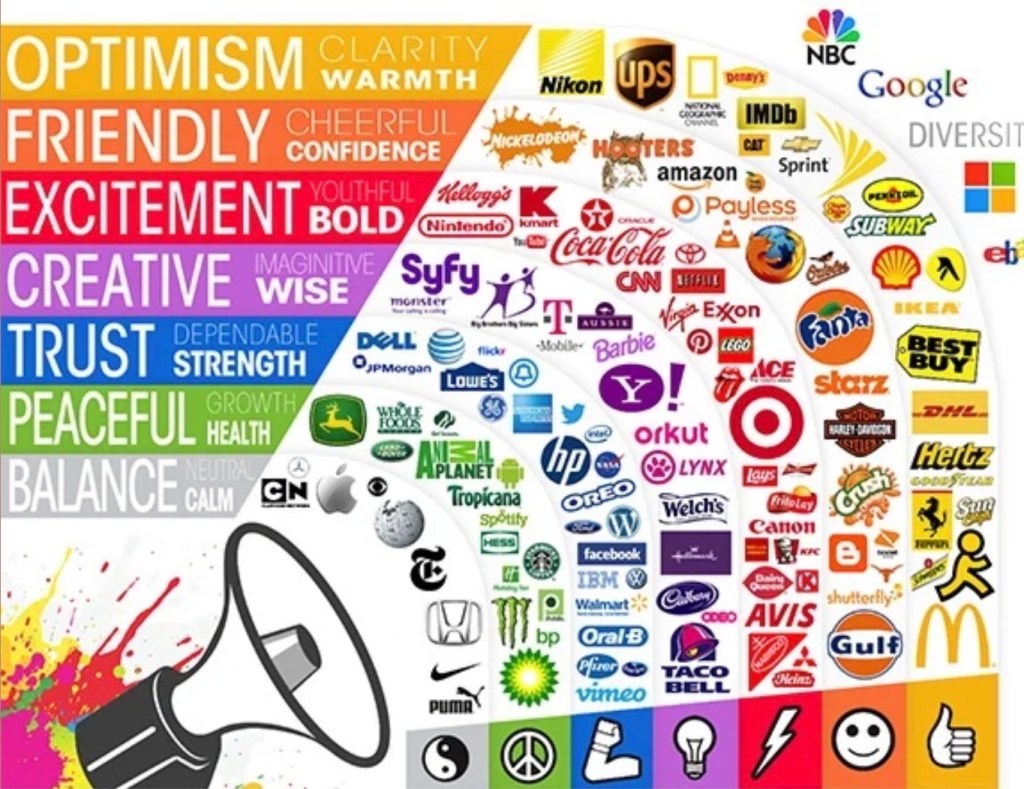
But, color does not have one universal meaning. Cultural background, personal experience, and context can influence how individuals interpret a design. A bright yellow display might suggest playfulness in one setting but communicate urgency in another. What matters is how the color interacts with the surrounding design and the identity the brand is attempting to establish.
This relationship can be observed in beauty retailers such as Sephora, where products are presented through distinctive visual identities despite being sold within the same environment. The Ordinary, for instance, uses restrained packaging and product descriptions that emphasize ingredients, creating an appearance associated with scientific credibility.
By comparison, Marc Jacobs Beauty has used more expressive packaging and displays that emphasize fashion and visual impact. Although these brands occupy different positions within the beauty market, both demonstrate how appearance can establish expectations before consumers evaluate the product itself.
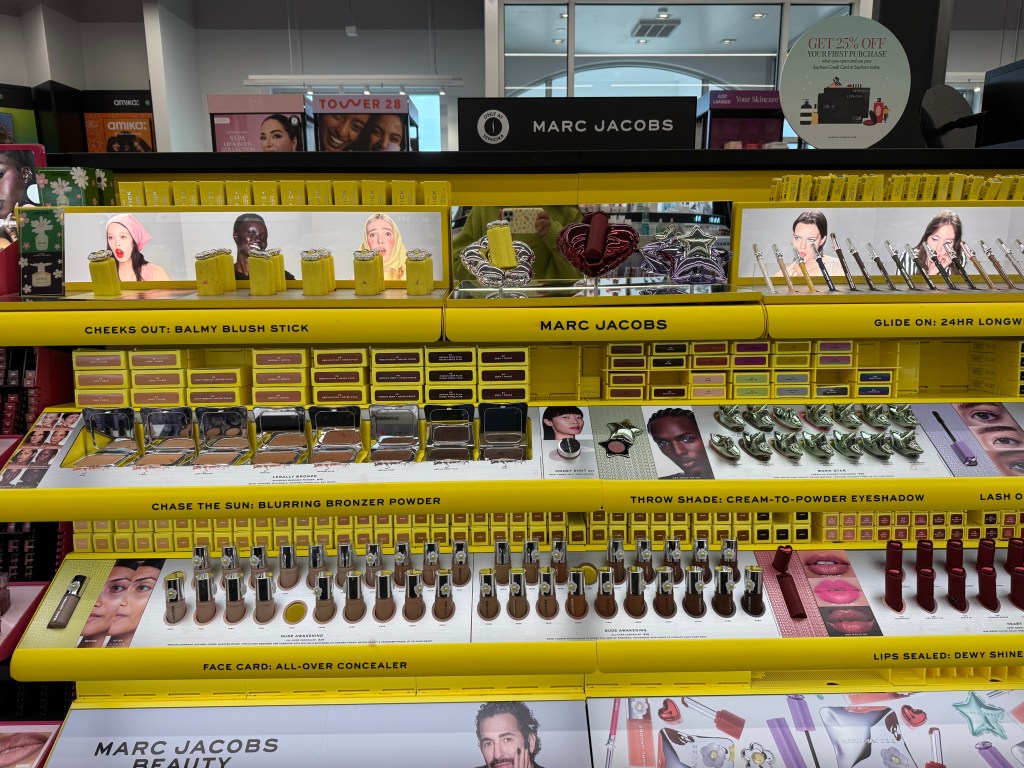
Their differences also reveal an important distinction between price and perceived value. A product does not necessarily need expensive-looking packaging to appear trustworthy, just as elaborate packaging does not guarantee effectiveness. Instead, brands establish value by creating a visual identity that consumers recognize and associate with particular qualities.
When Branding Becomes an Experience
While packaging may create the first impression, brands often develop a more complete experience to strengthen the connection consumers feel toward their products. This is particularly noticeable in physical retail environments, where the surrounding atmosphere can influence how people interpret what is being sold.
In Emotional Branding: The New Paradigm for Connecting Brands to People, Marc Gobé argues that successful branding depends on understanding consumers’ emotional needs and developing relationships that extend beyond practical product functions. His approach suggests that people are not always purchasing products solely because of what they accomplish. They may also be attracted to the experiences and emotional associations surrounding them.
LUSH is an interesting example of this approach. Its stores are distinguishable through their presentation of colorful bath products, distinctive black containers, and opportunities for customers to interact with products. Rather than relying entirely on polished packaging, the brand uses its retail environment to communicate a particular identity centered on sensory experiences and its stated ethical values. The presentation can make the act of shopping feel more interactive which allows consumers to experience products through more than their appearance.

The influence of these experiences can also be applied to digital environments. In Astriata’s article How Multi-Sensory Web Design Can Improve the User Experience, the design agency explains how websites can draw upon sensory memory to create more memorable interactions. Although consumers cannot physically smell or touch products through a screen, visual imagery can encourage them to imagine those sensations. A photograph of freshly cut soap, for example, may suggest texture and fragrance even though the viewer is experiencing it entirely through a digital display.
This creates an interesting connection between physical and digital branding. A brand that emphasizes sensory experiences in stores can attempt to recreate those associations through its website, allowing the visual identity to remain consistent across different environments.
Storytelling adds another dimension to this process. In How to Use the Hero’s Journey as a Design-Thinking + Foresight Tool, Leah Zaidi explains how designers can approach user experiences as stories in which consumers become the central characters. By considering people’s emotions and challenges, designers can create experiences that feel more personally relevant.
This suggests that companies are inviting consumers to imagine how that product could fit into their own lives. For example, a skincare advertisement may focus less on the moisturizer itself and more on the confidence associated with achieving a particular appearance. Additionally, they may cater this experience to all skin types and people to not only broaden their audience, but demonstrate what their brand stands for. This way, the product becomes part of a larger story.

However, this strategy raises an important question. When consumers become emotionally invested in a brand’s identity, are they evaluating the product itself or the lifestyle they believe it represents? The distinction becomes especially significant when branding encourages people to associate purchasing decisions with personal attributes or social acceptance.
The Relationship Between Branding and Social Status
The emotional appeal of branding becomes more complicated when certain products are associated with social status. Luxury brands frequently rely on carefully constructed visual identities to communicate exclusivity, encouraging consumers to view their products as symbols of achievement or belonging.
Donald Norman explores this relationship in Designers and Users: Two Perspectives on Emotion and Design, where he describes reflective design as the level at which people consciously interpret their experiences in relation to their identities and social environments. He explains that clothing choices can communicate social roles and status depending on the setting. The meaning of an outfit is therefore not determined entirely by its typical purpose, but also by the message it communicates to other people.
This concept helps explain why two products with similar functions may carry very different social meanings. A designer handbag and an affordable alternative might serve the same basic purpose, but their visual identities can create different expectations about the people who own them. Luxury branding can encourage consumers to associate certain products with success, while less expensive alternatives may be perceived as less desirable regardless of their actual usefulness.
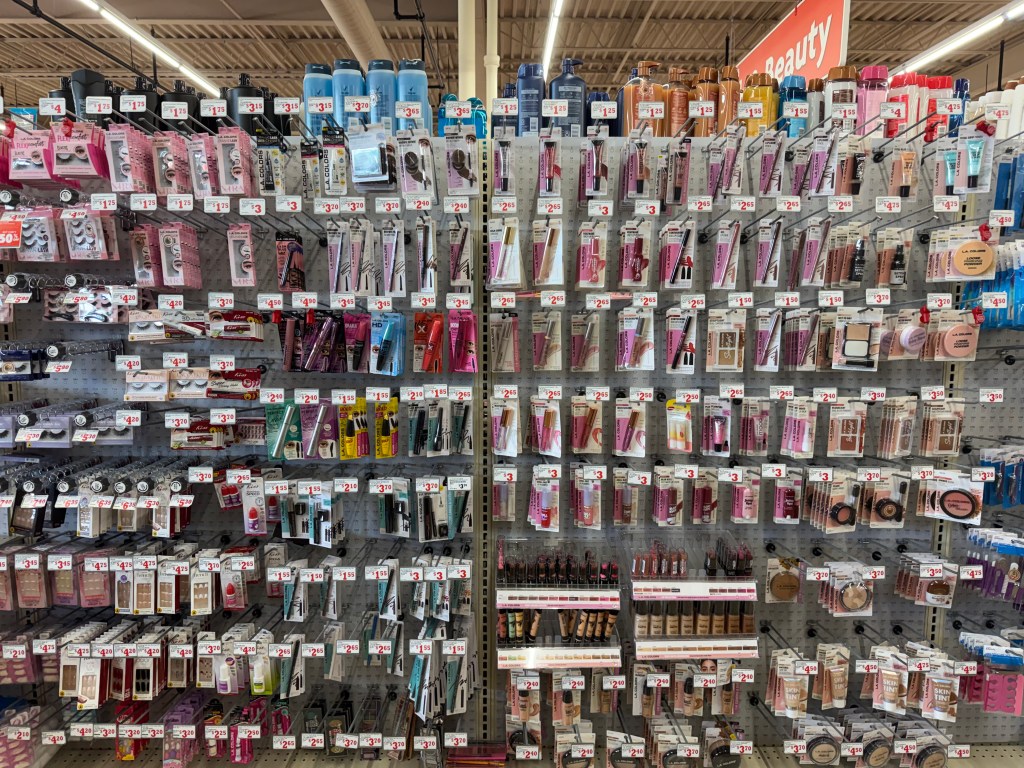
These distinctions can also be observed in the way products are presented across retail environments. At Family Dollar, beauty and hair products are commonly displayed with visible prices and promotional information that emphasize accessibility. In contrast, higher-end beauty retailers may give individual brands more space to establish a distinct identity through displays and imagery. The difference does not necessarily reflect the quality of every product being sold, but it can influence how consumers interpret their value.
In their study, Co-branding Strategies for Luxury Fashion Brands: Missoni for Target, E. Luck, G. Muratovski, and L. Hedley examine how collaborations between luxury designers and affordable retailers allow more consumers to access high-end fashion while raising questions about whether greater accessibility changes a brand’s exclusive image.
This raises a larger question about the relationship between affordability and social perception. If expensive-looking products are consistently associated with sophistication while budget-friendly products are presented primarily through their prices, consumers may begin to associate visual appearance with social class. Design can reinforce these assumptions even when brands are not explicitly making statements about the people who purchase their products.
The growing popularity of designer dupes complicates this relationship. In Premium Brands vs. Designer Dupes: The Battle for Gen Z’s Attention, the Bowerman Group discusses how younger consumers have increasingly embraced affordable alternatives to luxury products. Rather than treating a lower price as an automatic disadvantage, some consumers view finding a convincing alternative as an opportunity to participate in trends without paying premium prices.
This suggests that the meaning of value is changing. Consumers may appreciate the appearance associated with luxury while questioning whether the original product is worth its price. However, the continued popularity of dupes also demonstrates the influence of luxury branding because the alternative is often desirable precisely because it resembles an established premium product.
Cara O’Hanlon examines this issue in “Dupes”: Strategic Marketing or Proof of Copying?, published by the Fordham Intellectual Property Institute. Her analysis explains how brands use comparisons with recognizable products to communicate similarities, while raising legal concerns when those comparisons become misleading.
How Design Influences Consumer Decisions
Although consumers may believe their purchasing decisions are based primarily on personal preference, research into behavioral economics suggests that the presentation of information can influence how those preferences develop.
In Behavioural Economics Ideas that You Can Use in UX Design, the Interaction Design Foundation explains that people do not always make decisions through completely rational evaluations. Instead, their choices can be influenced by how information is presented and which details receive attention. The article discusses attribute priming, a process in which emphasizing a particular product characteristic can influence what consumers prioritize when making comparisons.
This has important implications for visual branding because design determines which characteristics consumers encounter first. A product photographed against an elegant background may encourage attention toward its appearance, while a package prominently displaying ingredient information may direct attention toward its practical benefits. Both presentations influence how the consumer begins evaluating the product, even if the underlying item remains unchanged.
Bridgeable explores another relevant concept in The Top 5 Behavioural Economics Principles for Designers, explaining how social proof can influence decisions when people are uncertain about which option to choose. Seeing that others have purchased or recommended a product can provide reassurance, making popularity itself appear to be evidence of value.
On shopping websites, this principle can appear through customer reviews, popularity labels, and product recommendations. These features are often visually emphasized to attract attention, allowing brands to communicate that a product is desirable because other consumers have already chosen it.

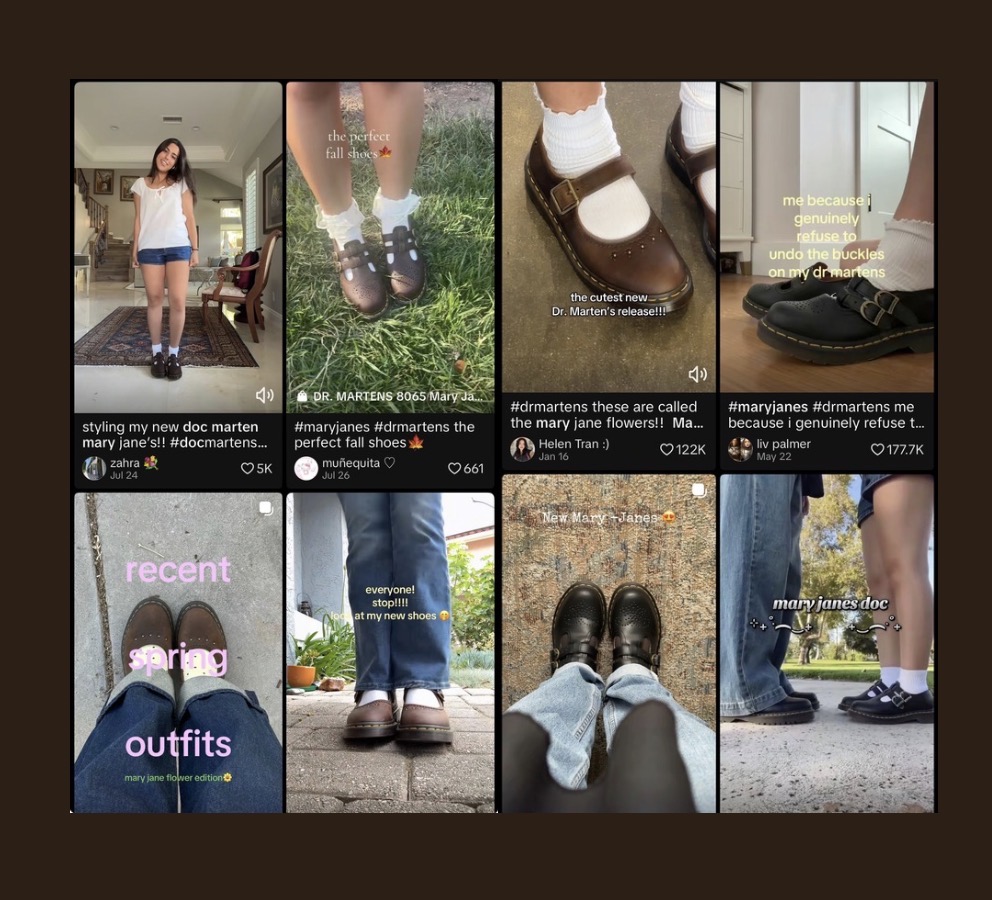
This is especially relevant to social media, where the visual presentation of products is closely connected to the people promoting them. A beauty product featured in an influencer’s carefully styled routine may appear more appealing because it becomes associated with the creator’s lifestyle. Consumers are not simply evaluating the product’s appearance; they are also interpreting the social approval surrounding it.
Eiman Negm and Passent Tantawi examine the relationship between advertising design and consumer interpretation in their 2015 study, Investigating the Impact of Visual Design on Consumers’ Perceptions towards Advertising. Their research considers how aesthetic choices influence viewers’ responses to advertisements, emphasizing that consumers actively interpret visual information rather than receiving it without judgment.
This distinction is important because branding does not remove consumers’ ability to make independent decisions. People can recognize marketing strategies and still appreciate a product’s design. Nevertheless, repeated exposure to particular visual messages can influence what feels familiar, desirable, or trustworthy. The effect becomes more significant when these associations extend beyond products and begin shaping expectations about the people who use them.
Representation and the People Brands Choose to Show
While branding influences perceptions of products, it also communicates messages about the people who are considered desirable consumers. Advertising frequently presents idealized lifestyles through the individuals selected to represent them, making diversity and representation essential parts of understanding how visual design constructs value.
In Why Representation Matters in Marketing, Angie Basiouny reports on research conducted by Wharton marketing professor Zhenling Jiang and her co-authors. The study examined mortgage refinancing advertisements and found that increasing minority representation in commercials from 15% to 25% was associated with a 14% increase in advertising elasticity. The findings suggest that diverse representation can improve advertising effectiveness, including among consumers who do not share the identities of the people featured.
These findings challenge the assumption that inclusive advertising appeals only to specific demographic groups. Instead, representation can communicate broader messages about a brand’s identity and the customers it intends to welcome.

This is particularly meaningful within beauty and fashion marketing, where advertising has historically contributed to narrow expectations about appearance. The models selected for campaigns can influence which skin tones, body types, and styles are associated with attractiveness or sophistication. When brands repeatedly present similar people as the ideal consumers of their products, those images can contribute to expectations about who belongs within particular spaces.

Sonia Thompson addresses these concerns in her Forbes article, Representation in Marketing Is Critical. How to Ensure Your Brand Gets It Right. She argues that representation should move beyond simply including people from marginalized communities and consider whether the imagery accurately reflects their experiences. Thompson also explains that stereotypical portrayals can reinforce harmful assumptions even when a campaign appears diverse.
This distinction highlights why representation cannot be evaluated solely by counting the number of diverse faces in an advertisement. A campaign might feature people from different backgrounds while continuing to promote a narrow definition of beauty or success. Meaningful representation requires attention to how individuals are portrayed and whether they are given the same visibility and dignity as others.
Fenty Beauty provides a useful example of how representation can become part of a brand’s visual identity. Its marketing has emphasized a broad range of skin tones, challenging the idea that beauty products should be designed or advertised around a limited complexion range. The visual presence of different models communicates that a wider audience belongs within the brand’s definition of beauty.
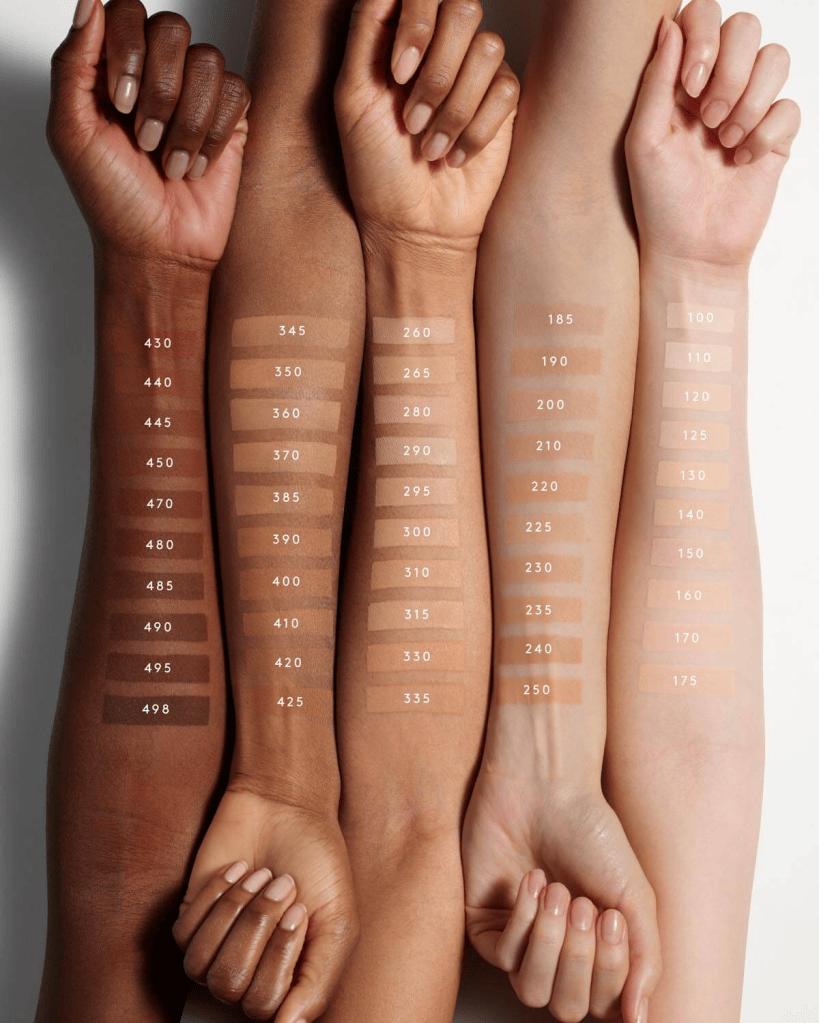
At the same time, Fenty’s association with Rihanna demonstrates how celebrity identity contributes to perceived value. Her image can communicate familiarity and cultural relevance, while the brand’s emphasis on inclusivity gives consumers another reason to develop an emotional connection with its products. These elements work together, creating an identity that extends beyond the appearance of an individual makeup product.
The relationship between representation and design also raises questions about who is responsible for constructing these images. In his contribution to Visual Storytelling, Andrew Losowsky acknowledges the lack of diversity among influential figures in the field of visual storytelling. His observation suggests that representation is not only a concern within the finished images audiences encounter, but also within the creative industries responsible for producing them.
When design industries lack diverse perspectives, the stories being communicated may reflect a limited understanding of the audiences they are intended to reach. Expanding representation behind the scenes can therefore influence the kinds of visual narratives that brands create.
Ultimately, inclusive marketing has the potential to challenge established ideas about who deserves visibility. However, that potential depends on whether brands treat representation as a meaningful part of their identity rather than simply another strategy for increasing sales.
When Visual Value Becomes Social Value
The relationship between branding and representation reveals how visual design can influence judgments that extend beyond purchasing decisions. When particular products are consistently associated with wealth, confidence, or beauty, the people shown using those products may become associated with the same qualities.
This does not mean that consumers automatically accept every message presented to them. Personal experiences and cultural backgrounds influence how individuals interpret advertising, and people can question or reject the expectations promoted by brands. Nevertheless, visual communication contributes to the broader environment in which those expectations develop.
The research discussed throughout this essay demonstrates that perceived value is not created through one isolated design choice. It develops through repeated associations between a brand’s appearance and the meanings consumers attach to it. The same process that makes a product recognizable can also establish expectations about the lifestyle or identity it represents.
This is particularly important when considering the differences between luxury and affordable branding. Products presented through polished imagery and carefully constructed retail environments may appear more prestigious, while those displayed primarily through promotional messaging may be interpreted differently. These distinctions can reinforce social assumptions about class, even when the actual quality of the products has not been evaluated.
Representation adds another layer because brands communicate not only what is desirable but also who is shown participating in that desirability. An advertisement featuring a diverse range of people can challenge narrow expectations, while one that repeatedly excludes certain communities may reinforce the idea that particular lifestyles are intended for a limited audience.
The responsibility of visual designers therefore extends beyond creating attractive products or effective advertisements. Their choices influence the messages that consumers encounter and the assumptions those messages may encourage. Recognizing this influence does not require rejecting branding altogether. Instead, it creates an opportunity to examine how design can communicate value without relying on exclusion or misleading expectations.
Conclusion
Visual design has become an essential part of how brands establish value, often influencing consumers before they have the opportunity to evaluate a product’s actual quality or purpose. Through carefully constructed identities and experiences, companies create associations that make their products recognizable and emotionally meaningful. These associations help explain why two products with similar functions can be perceived so differently and why consumers may become attached to brands that reflect the lifestyles they admire.
However, the influence of branding does not end with the products themselves. The visual identities companies create can reinforce expectations about social status and beauty while shaping who consumers imagine belongs within certain spaces. Representation plays an especially important role in this process because the people selected for advertisements help communicate the values a brand wants audiences to recognize.
Understanding visual branding therefore requires looking beyond whether a design successfully attracts attention or encourages purchases. It also means considering the social messages communicated through those choices and how they influence the way people interpret themselves and others. Ultimately, brands do not simply show consumers what is valuable. Through visual design, they participate in shaping what value looks like and who is included in that image.
Bibliography
Course and Online Sources
Astriata. “How Multi-Sensory Web Design Improves User Experience.” Astriata, https://astriata.com/how-multi-sensory-web-design-improves-user-experience/.
Basiouny, Angie. “Why Representation Matters in Marketing.” Knowledge at Wharton, University of Pennsylvania, 28 May 2024, https://knowledge.wharton.upenn.edu/article/why-representation-matters-in-marketing/.
Bowerman Group. “Premium Brands vs. Designer Dupes: The Battle for Gen Z’s Attention.” Bowerman Group, https://bowermangroup.com/premium-brands-designer-dupes-gen-z-attention/.
Bridgeable. “The Top 5 Behavioural Economics Principles for Designers.” Bridgeable, https://www.bridgeable.com/ideas/the-top-5-behavioural-economics-principles-for-designers/.
Clark-Keane, Céillie. “8 Ways to Use Color Psychology in Marketing (With Examples).” WordStream, 12 July 2022, https://www.wordstream.com/blog/ws/2022/07/12/color-psychology-marketing. (Module 3)
“History of Visual Communication.” History of Visual Communication, https://www.historyofvisualcommunication.com/. (Module 1)
Interaction Design Foundation. “Behavioural Economics Ideas That You Can Use in UX Design.” Interaction Design Foundation, https://assets.interaction-design.org/literature/article/behavioural-economics-ideas-that-you-can-use-in-ux-design.
Losowsky, Andrew. “Visual Storytelling.” Visual Storytelling: Inspiring a New Visual Language, Gestalten, 2011. (Module 1)
Norman, Donald A. “Designers and Users: Two Perspectives on Emotion and Design.” Interaction Design Institute Ivrea, http://projectsfinal.interactionivrea.org/2004-2005/SYMPOSIUM%202005/communication%20material/DESIGNERS%20AND%20USERS_Norman.pdf. (Module 3)
O’Hanlon, Cara. “‘Dupes’: Strategic Marketing or Proof of Copying?” Fordham Intellectual Property Institute, https://fordhamipinstitute.com/dupes-strategic-marketing-or-proof-of-copying/.
Thompson, Sonia. “Representation in Marketing Is Critical. How to Ensure Your Brand Gets It Right.” Forbes, 31 July 2023, https://www.forbes.com/sites/soniathompson/2023/07/31/representation-in-marketing-is-critical-how-to-ensure-your-brand-gets-it-right/.
Zaidi, Leah. “How to Use the Hero’s Journey as a Design-Thinking + Foresight Tool.” NYC Design, Medium, 4 Sept. 2018, https://medium.com/nyc-design/how-to-use-the-heros-journey-as-a-design-thinking-tool-c4901be5ce. (Module 2)
Scholarly and Primary Sources
Gobé, Marc. Emotional Branding: The New Paradigm for Connecting Brands to People. Allworth Press, 2010. Google Books, https://books.google.com/books?id=fmmCDwAAQBAJ.
Luck, Edwina, Gjoko Muratovski, and Lauren Hedley. “Co-Branding Strategies for Luxury Fashion Brands: Missoni for Target.” Global Fashion Brands: Style, Luxury and History, Intellect, 2014, pp. 41–56. https://doi.org/10.1386/9781783203574_5.
Negm, Eiman, and Passent Tantawi. “Investigating the Impact of Visual Design on Consumers’ Perceptions towards Advertising.” International Journal of Scientific and Research Publications, vol. 5, no. 4, Apr. 2015, https://www.ijsrp.org/research-paper-0415.php?rp=P403919.
Schmitt, Bernd, and Alex Simonson. Marketing Aesthetics: The Strategic Management of Brands, Identity, and Image. Free Press, 1997. Google Books, https://books.google.com/books?id=V8oVl4xPq4gC.

