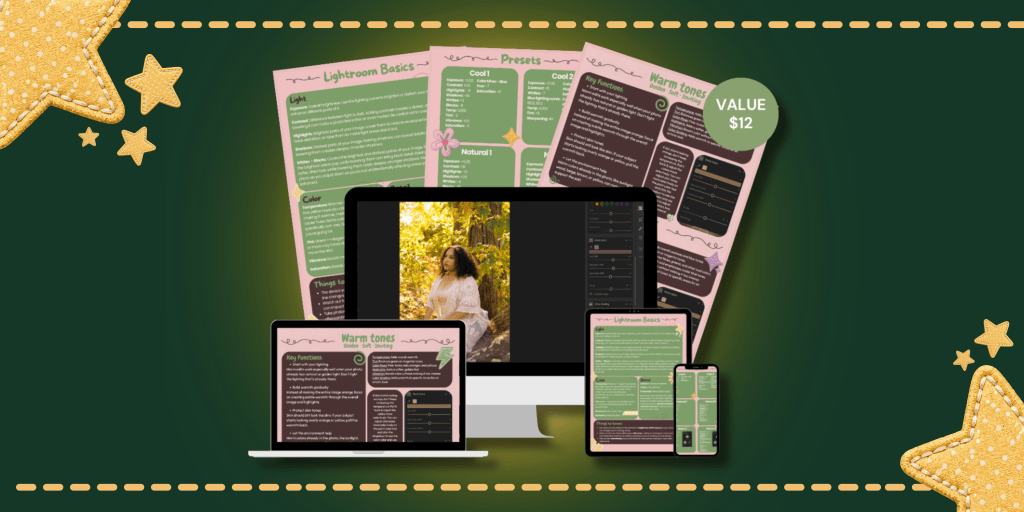
For my final digital product, I created a Lightroom preset collection and beginner-friendly editing guide designed to help creators edit their photos more easily and develop a more cohesive visual style. Creating the sales page helped me think about my product from the customer’s perspective rather than just focusing on what I created.
I started by researching other Lightroom preset sales pages to see how similar products were presented to customers. Three sales pages that influenced my approach were Pretty Presets for Lightroom, Lou & Marks Presets, and Chasing Sunsets Presets.
Pretty Presets uses different preset collections and clearly explains what is included with each product. Lou & Marks focuses on making editing feel simple and accessible, including language about creating edits without needing previous experience. Chasing Sunsets also influenced me because its sales page focuses heavily on the problems customers experience, such as spending too much time editing and struggling with consistency.
I used these examples when developing my own sales page because I wanted the page to immediately explain what my product offers, who it is for, and what problem it solves. I included various sections throughout the page to help give buyers and potential customers a thorough run down of my product.
For my pricing strategy, I decided to price my product at $12. I wanted the price to feel accessible for my target audience, especially students, beginner creators, and people who are interested in improving their photos without making a large investment.
I also looked at the prices of similar products. For example, Lou & Marks currently lists individual preset collections at sale prices around $9, while Pretty Presets has individual collections around $39 and higher-priced bundles. Based on these comparisons, $12 felt appropriate for a smaller beginner-focused product that combines presets with an editing guide.
One of my biggest discoveries about customer psychology was that customers are not necessarily buying the product itself. They are buying the result they hope the product will help them achieve. Instead of simply saying that my product includes Lightroom presets, I focused my sales page on saving time, reducing confusion, and helping customers feel more confident when editing. I also learned that showing the product visually is important because customers want to understand exactly what they are getting before purchasing.
Overall, creating my sales strategy taught me that successful digital products need more than just a good idea. The product, price, messaging, visuals, and customer experience all need to work together to clearly communicate the value of what is being offered.

